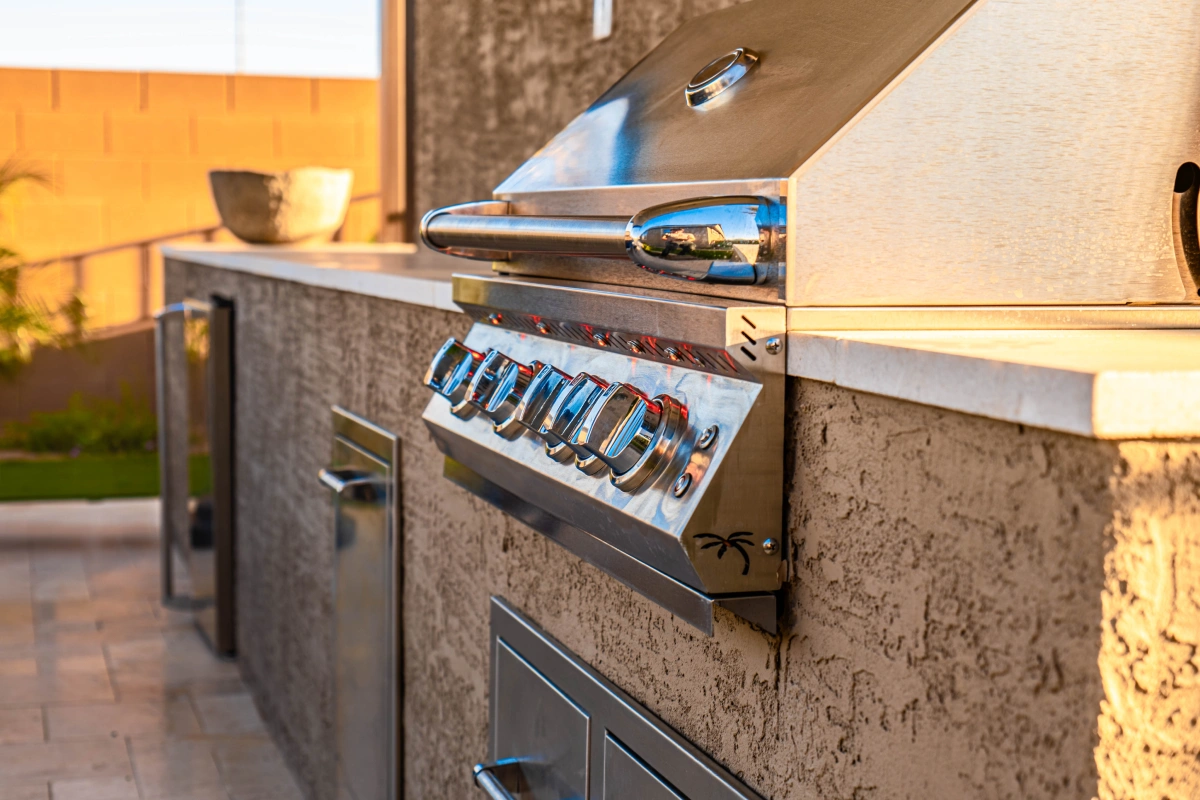
Key Points:
- Your biggest enemy isn’t the cost; it is the Arizona sun. Shade, material selection, and placement dictate whether you will use the kitchen or avoid it.
- Built-in grills are just the start. You need to plan for electrical, gas lines, and drainage before laying a single paver.
- A successful design integrates the kitchen with your pool and seating areas, creating a cohesive outdoor living space rather than a standalone cooking island.
The Real Question: Will We Actually Use It When It Is 115 Degrees Outside?
When homeowners in Gilbert or Chandler start planning an outdoor kitchen, they usually bring us a Pinterest board full of beautiful, sprawling setups. But after looking at the designs, the real anxiety sets in. They secretly wonder, “Are we going to spend all this money on a luxury outdoor kitchen just to hide inside from June through September?”
It is a valid fear. Nobody wants to stand over a hot grill when the ambient temperature is already blistering. The truth is, an outdoor kitchen in Arizona will only get used if it is designed specifically for our climate. This guide will walk you through the practical decisions you need to make to ensure your investment becomes a functional, year-round extension of your home.
Understanding the Arizona Climate Challenge
The East Valley climate is brutal on outdoor living spaces. We deal with intense UV exposure that fades cheap materials in a single season. We have monsoon storms that test the structural integrity of every pergola and patio cover. We also have to manage water runoff during sudden downpours.
If you live in a newer development in Queen Creek, you might have a blank slate but zero mature trees for natural shade. If you are in an older Mesa neighborhood, you might be dealing with hard caliche soil that makes running new gas and electrical lines a major undertaking. A successful design anticipates these challenges rather than ignoring them.
Shade and Placement: The Non-Negotiable Foundation
The single biggest mistake homeowners make is placing their outdoor kitchen in direct afternoon sun. If your grill station faces west without cover, you will never use it for dinner during the summer. Period.
Your outdoor kitchen needs dedicated shade. This could mean extending your existing patio roof, building a custom ramada, or integrating a solid pergola structure. The placement should also consider the prevailing wind direction, especially during monsoon season, so you are not fighting smoke blowing directly into your seating area or back into your house.
Material Selection for the Desert
When it comes to materials, what works in the Midwest will not necessarily survive in Scottsdale or San Tan Valley. You need surfaces that can handle the extreme temperature swings and relentless sun.
- Countertops: Avoid dark materials that absorb heat and will burn your hands in July. Light-colored granite, concrete, or specific types of porcelain are better choices.
- Cabinetry: Standard wood cabinets will warp and rot. You need marine-grade polymer, stainless steel, or masonry block construction to withstand the elements.
- Finishes: Stucco or stone veneer must be properly sealed to prevent water intrusion during monsoon storms, which can cause the finish to pop off when the moisture expands in the heat.
Comparing Appliance Configurations
You do not need a massive, commercial-grade setup to have a great outdoor kitchen. The key is understanding how you actually cook and entertain.
| Appliance Strategy | Best For | Considerations |
|---|---|---|
| The Basics (Grill + Prep Space) | Weekend burgers, simple family dinners. | Highly functional, leaves budget for better shade structures. |
| The Entertainer (Grill + Fridge + Sink) | Hosting pool parties, keeping drinks cold outside. | Requires running water and electrical lines, increasing the project scope. |
| The Full Chef (Grill + Smoker + Side Burners) | Serious cooks who want to do everything outside. | Requires significant gas and electrical infrastructure; highest investment. |
Expensive appliances are not always necessary if you understand your actual usage patterns. A high-quality basic grill station that is well-shaded will get used far more than a luxury full-chef setup sitting in the direct sun.
Planning Your Infrastructure
Before you pick out the fun stuff like tile and countertops, you have to plan the invisible infrastructure. This is where working with experienced, skilled professionals is critical.
You need to know if your current gas meter can support the additional draw of a large built-in grill. You need dedicated electrical circuits for outdoor refrigerators and lighting. If you want a sink, you must plan for both a water supply line and proper drainage, which can be complicated depending on your yard’s slope and existing hardscape.
Integrating the Kitchen with Your Backyard Vision
An outdoor kitchen should never feel like an afterthought. It needs to connect seamlessly with your pool, your dining area, and your home’s architecture.
If you are hosting a pool party in Paradise Valley, the person grilling should not be isolated in a far corner of the yard. The kitchen should feature bar seating or face the pool, allowing the cook to remain part of the conversation. This level of thoughtful integration is why a unified design-build process is so valuable.
Making Your Outdoor Kitchen a Reality
Now that you understand what goes into a successful outdoor kitchen, the next step is working with a design-build firm that can translate your vision into a space that actually works for your lifestyle. You need a team that understands the nuances of East Valley construction and can guide you through these critical decisions.
At Urban Outdoor Solutions, we are a family-owned design-build firm with over a decade of experience and dual ROC licenses (#345870 & #342297). Our owner, Joel, is personally involved in every project, ensuring owner-led quality control. We use a collaborative 3D design process so you can see exactly how your kitchen will look and function before we ever break ground.
Schedule a design consultation with Urban Outdoor Solutions today, and let’s explore how we can enhance your East Valley lifestyle with a custom outdoor kitchen.
Frequently Asked Questions
Do I need a permit to build an outdoor kitchen in Arizona? Yes, almost always. If you are running new electrical circuits, extending gas lines, or building a shade structure, local municipalities require permits and inspections to ensure the work is safe and up to code.
How long does it take to build an outdoor kitchen? Once the design is finalized and permits are secured, the actual construction typically takes 4 to 8 weeks. This timeline depends heavily on the complexity of the utility work and the availability of specific materials or appliances.
Can I just buy a pre-fab grill island instead of building custom? Pre-fab islands are an option, but they often lack the durability required for the Arizona climate and cannot be customized to match your home’s exact aesthetic or fit seamlessly into your existing patio layout.