Key Takeaways
- A typical residential pool in the East Valley can lose 3,000 to 6,000+ gallons per month to evaporation during summer — more water than many households use indoors.
- Pool shape, surface area, sun exposure, wind exposure, and water temperature all directly affect how fast water evaporates.
- Design choices made before construction — including pool size, orientation, shade integration, and cover compatibility — are the most effective tools for managing long-term water use.
Water conservation is not optional in the East Valley. Arizona’s desert climate creates some of the highest evaporation rates in the country, and for pool owners in Gilbert, Chandler, Queen Creek, and Mesa, evaporation is the single largest source of water loss.
Understanding how evaporation works — and how your pool’s design affects it — helps you make smarter decisions whether you are building a new pool or looking to reduce water use on an existing one.
How Evaporation Works in the Arizona Desert
Evaporation is driven by the difference in vapor pressure between the pool’s water surface and the air above it. In practical terms, four factors control the rate:
Temperature. Warmer water evaporates faster. In the East Valley, pool water temperatures regularly reach 85°F to 90°F+ during summer without a heater. Air temperatures above 110°F widen the temperature gap even further, accelerating the process.
Humidity. Low humidity means the air can absorb more moisture from the pool surface. Phoenix-area relative humidity frequently drops below 15% during summer afternoons — dramatically lower than most of the country.
Wind. Moving air carries away the thin layer of saturated air directly above the water surface, replacing it with drier air and restarting the evaporation cycle. Even light breezes increase evaporation rates noticeably.
Surface area. The larger the water surface exposed to air, sun, and wind, the more water evaporates. This is where pool design has the most direct impact on conservation.
How Much Water Are We Talking About?
Evaporation rates in the East Valley typically range from a quarter inch to half an inch per day during peak summer months. For a standard 400-square-foot pool, that translates to roughly:
| Season | Daily Loss | Monthly Loss (approx.) |
|---|---|---|
| Summer (June–Sept) | 60–125 gallons/day | 1,800–3,750 gallons |
| Spring/Fall | 30–75 gallons/day | 900–2,250 gallons |
| Winter (Dec–Feb) | 15–40 gallons/day | 450–1,200 gallons |
Larger pools, pools with attached spas, and pools with water features that spray or agitate the surface can lose significantly more. A 600-square-foot pool with active water features during summer can exceed 5,000 gallons per month in evaporation alone.
For context, the average Arizona household uses roughly 6,000 to 8,000 gallons of water per month indoors. An uncovered pool during summer can nearly match that.
How Pool Design Affects Evaporation
The most effective water conservation happens at the design stage — before the pool is built. Several design decisions directly influence how much water your pool will lose over its lifetime:
Surface area vs. usable swimming space
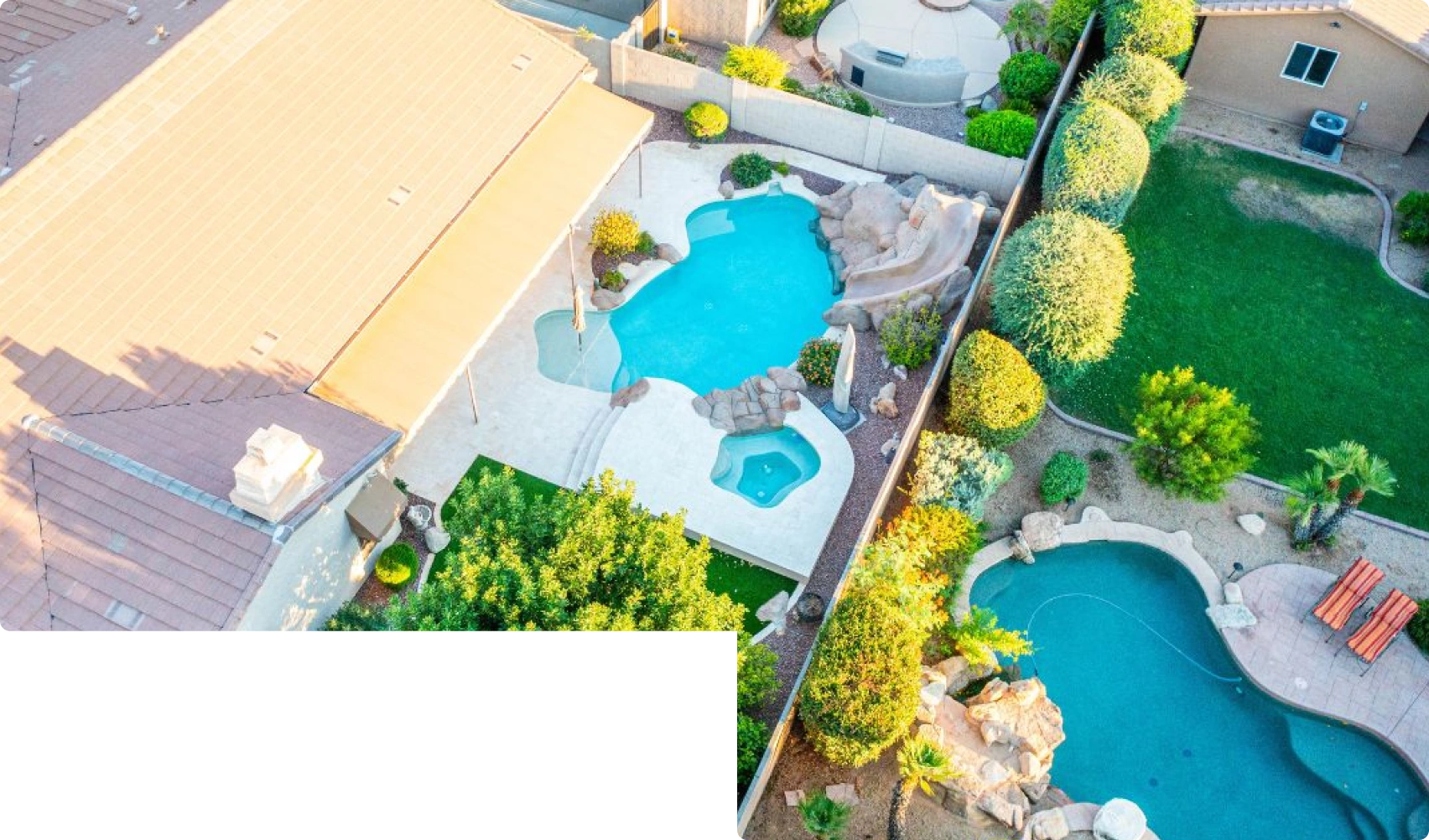
Not all pool shapes use surface area equally. A compact, efficient shape — like a modified rectangle or geometric design — maximizes swimming space while minimizing the total surface exposed to evaporation. Elongated or highly irregular shapes can increase surface area relative to usable volume.
This does not mean you should avoid a freeform or organic pool shape for conservation reasons alone. But it is worth understanding the trade-off: a pool with 20% more surface area will lose roughly 20% more water to evaporation, all else being equal.
Depth profile
Deeper water stays cooler than shallow water. Pools with large shallow areas — including tanning ledges and beach entries — heat up faster under Arizona’s intense sun, which increases evaporation from those zones. Balancing shallow features with adequate deeper areas helps moderate overall water temperature.
Orientation and shade integration
A pool oriented to receive afternoon shade from the home, a shade structure, or mature trees can reduce both water temperature and direct solar exposure on the water surface. In the East Valley, afternoon shade is particularly valuable because the most intense heat and lowest humidity occur between 1:00 PM and 5:00 PM.
At Urban Outdoor Solutions, we design pools as part of a complete backyard environment — including shade structures, landscape placement, and lighting — so every element works together to create a comfortable, water-efficient outdoor space.
Water feature design
Water features that spray, arc, or agitate the surface — including deck jets, sheer descents, bubblers, and scuppers — increase the surface area of water exposed to air and accelerate evaporation. This does not mean you should avoid them, but features that run continuously use more water than those controlled by timers or automation.
Designing water features with automation built in — so they run during cooler evening hours rather than peak afternoon heat — can meaningfully reduce evaporation without sacrificing the experience.
Proven Strategies to Reduce Pool Evaporation
Pool covers
Pool covers are the single most effective tool for reducing evaporation. A properly fitted cover can reduce water loss by 90% or more when the pool is not in use.
Options include:
- Liquid solar covers — invisible surface-layer products that reduce evaporation by 15–40%
- Solar blankets — floating covers that reduce evaporation and retain heat; manual removal required
- Automatic pool covers — retractable hard or soft covers that can be deployed with a switch; the most effective and convenient option for daily use
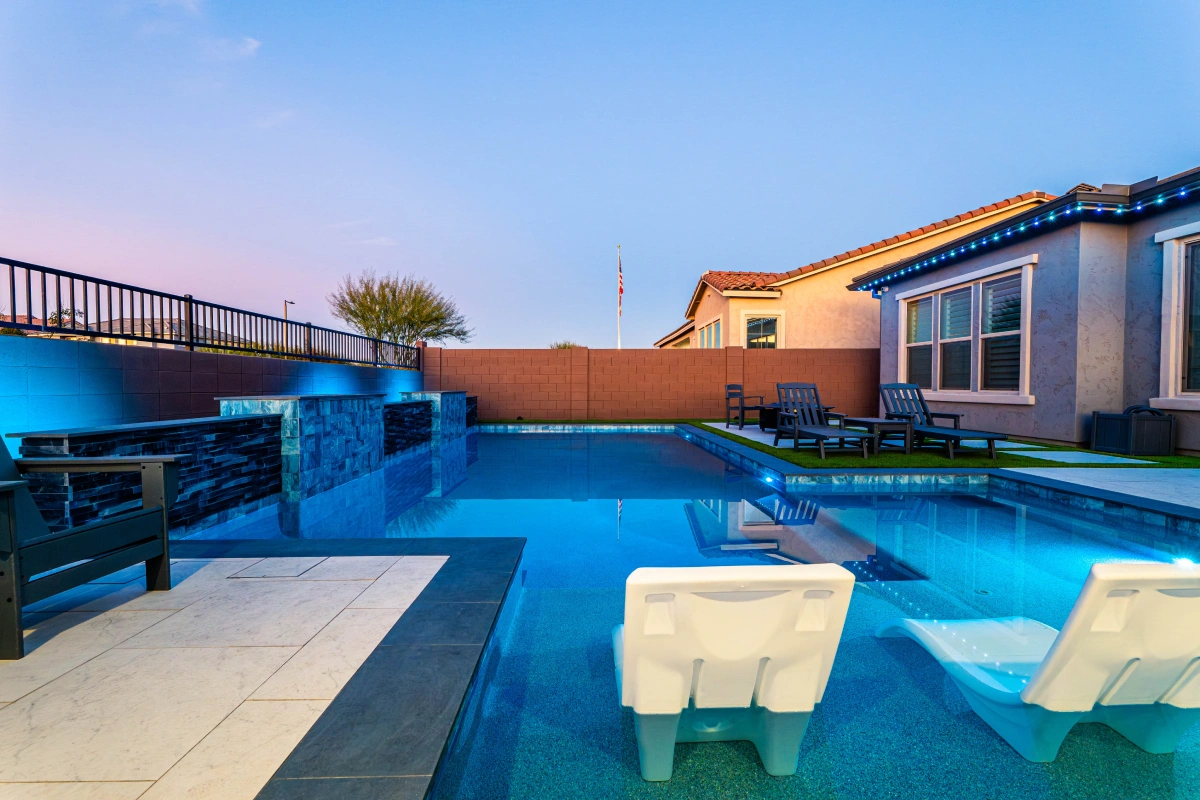
When designing a new pool, consider cover compatibility from the start. Automatic covers work best with simpler geometric shapes — rectangles and modified rectangles integrate most cleanly. Complex freeform shapes may require custom cover solutions or may be better served by liquid covers.
Wind barriers
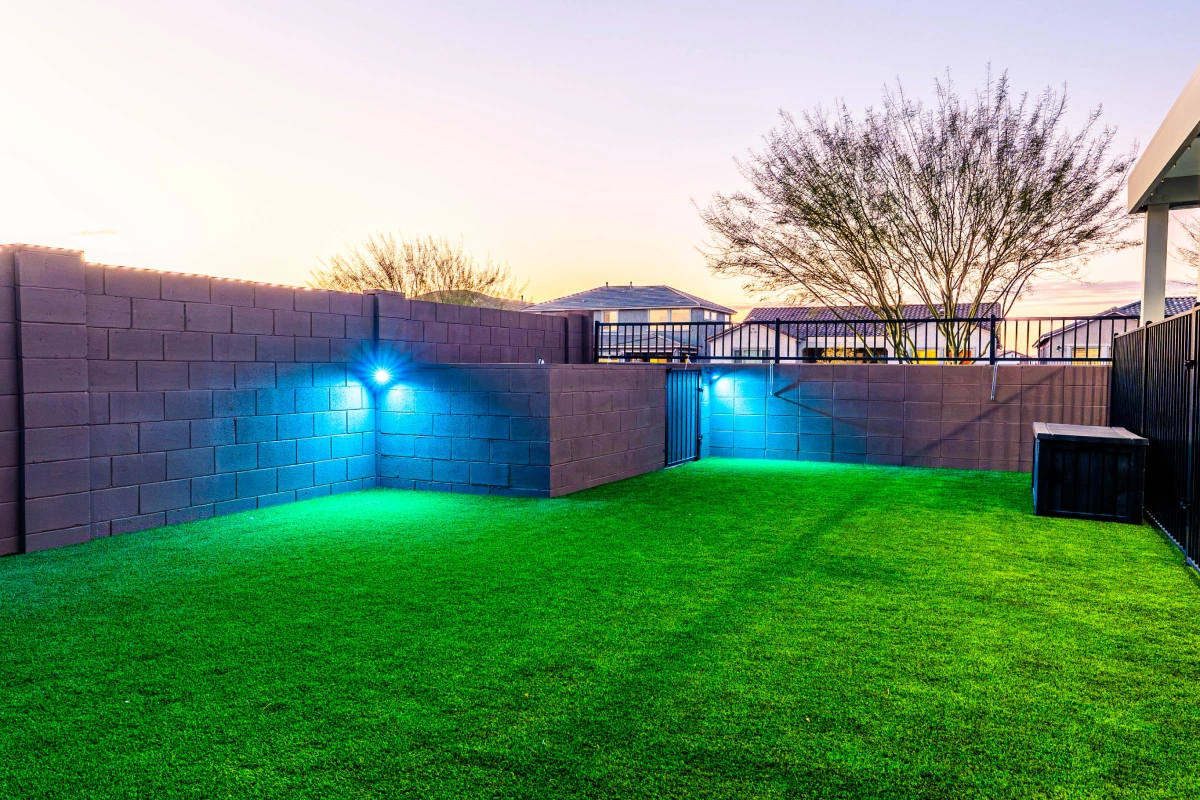
Strategic placement of walls, raised planters, hedges, or glass panels around the pool area reduces wind speed across the water surface. Even modest wind reduction can lower evaporation rates by 10–30%.
Drip irrigation and drainage systems can support hedge and planting installations around the pool area that serve double duty as wind barriers and privacy screening.
Water temperature management
Keeping pool water cooler reduces evaporation. Strategies include:
- Running the pool pump during off-peak hours to circulate cooler water
- Using reversible heat pumps to actively cool water during extreme heat
- Designing adequate depth so the full volume does not heat up as quickly
Smart automation
Modern pool automation systems can schedule water features, pumps, and lighting based on time of day and temperature. Running features during evening hours when temperatures drop and humidity rises minimizes evaporation while maximizing enjoyment.
Building a New Pool With Conservation in Mind
If you are planning a custom pool in the East Valley, the design phase is the most impactful time to address water conservation. Decisions about shape, size, depth profile, shade integration, feature design, and cover compatibility are far easier and less expensive to make before construction begins than to retrofit later.
At Urban Outdoor Solutions, we are a family-owned design-build firm with over a decade of experience creating complete outdoor environments in Gilbert, Chandler, Queen Creek, and Mesa. Every pool we design considers Arizona’s climate from the first concept — because building a beautiful pool that wastes thousands of gallons per month is not smart design.
Our 3D design process lets you visualize how your pool, landscape, shade, and features work together before any excavation begins — including how design choices affect water use, maintenance, and long-term operating cost.
Start With a Design That Respects the Desert
Water is precious in Arizona, and your pool should be designed to use it wisely. Whether you are building new or looking to reduce water loss on an existing pool, the right combination of design, covers, and automation can cut evaporation dramatically without sacrificing the backyard experience.
Schedule a design consultation with Urban Outdoor Solutions to discuss your project and learn how smart pool design protects both your investment and Arizona’s most valuable resource.