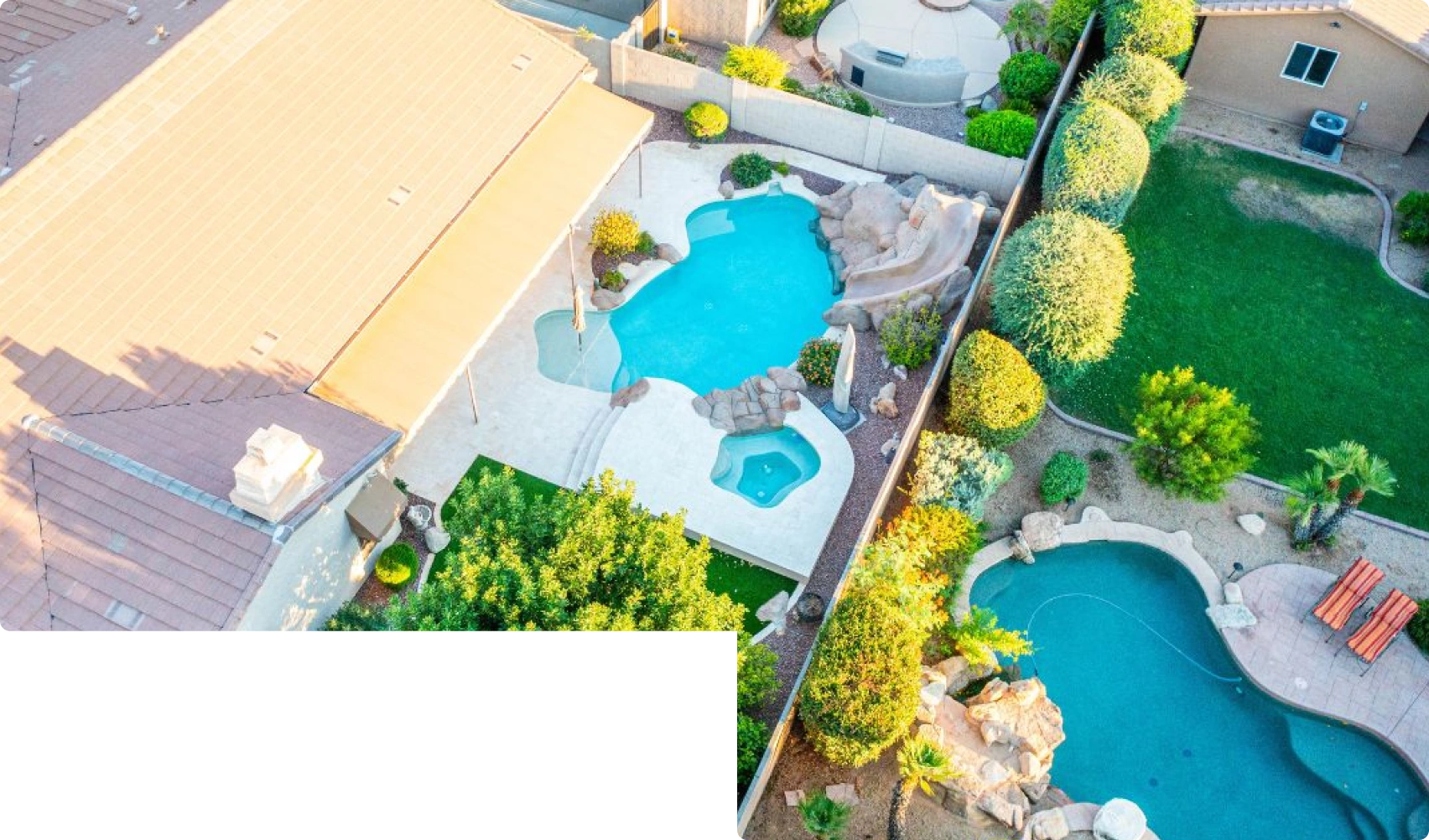
Key Points:
- Modern pool shapes like freeform and kidney designs typically require a higher investment due to complex construction and custom finishes, but they often maximize usable yard space better than standard rectangles.
- The shape of your pool directly impacts water circulation and heating efficiency, which is a critical factor when dealing with Arizona’s extreme temperature fluctuations.
- Choosing the right shape depends heavily on your specific lot; older neighborhoods with mature trees often require creative curves, while newer open developments can support ambitious geometric designs.
The Real Question: Are Curved Pools Worth the Extra Cost, or Should I Stick With a Traditional Rectangle?
When homeowners in Gilbert or Chandler start planning a new backyard oasis, they often bring us inspiration photos filled with flowing, lagoon-style pools and dramatic custom shapes. But when we sit down to look at the site plan, a common hesitation surfaces. They secretly wonder, “Is a curved pool actually going to improve my entertaining experience, or am I just paying a premium for a fancy shape when a rectangle would work just fine?”
It is an incredibly common concern. A swimming pool is a significant investment, and nobody wants to overpay for a design feature that does not add practical value to their daily life. The reality is that modern, non-rectangular shapes are not just about aesthetics; they solve specific spatial and functional problems in Arizona yards. This guide will help you understand the practical trade-offs of different pool shapes so you can decide which design truly fits your property and lifestyle.
Addressing the Uncomfortable Questions About Pool Shapes
When we consult with homeowners in Queen Creek or Mesa, they usually have a few pressing questions about pool shapes that they want answered plainly. Let us address the most common concerns.
Do modern pool shapes cost significantly more? Yes, custom and freeform shapes generally require a higher investment than a standard rectangle. The curves require more complex excavation, intricate steel and plumbing work, and specialized craftsmanship when applying finishes like pebble or tile.
Are non-rectangular pools harder to maintain? They can be, but it depends on the design. Pools with sharp interior angles or tight curves can create “dead spots” where water circulation is poor, allowing algae to grow more easily. A well-designed freeform pool will include strategically placed return jets to ensure proper water movement.
Do custom shapes hold up in the Arizona heat? The shape of the pool does not dictate its durability in the heat; the materials and construction quality do. However, the shape does affect how much water surface area is exposed to the intense summer sun, which impacts evaporation rates and how quickly the pool heats up in July.
Real-World Specificity: Designing for East Valley Yards
Designing a pool in the East Valley requires navigating specific environmental and spatial challenges. A shape that works beautifully in a sprawling San Tan Valley lot might be completely wrong for a compact yard in Tempe.
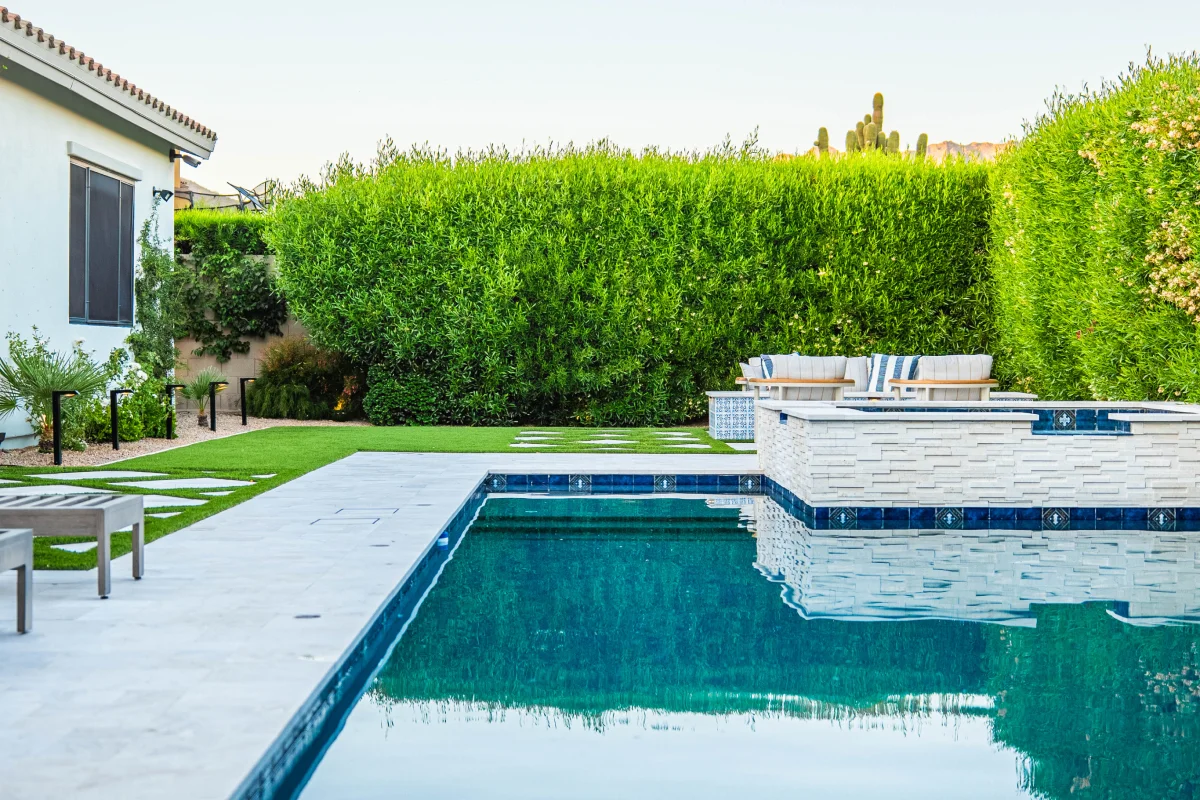
For example, if you live in an older Scottsdale neighborhood with mature landscaping and established hardscape, a rigid rectangular pool might look forced and require destroying beautiful existing trees. In this scenario, a freeform or kidney-shaped pool can be designed to weave naturally around the existing environment, preserving the yard’s character. Integrating your pool with existing landscaping features like curated softscapes and mature trees creates a harmonious outdoor living space.
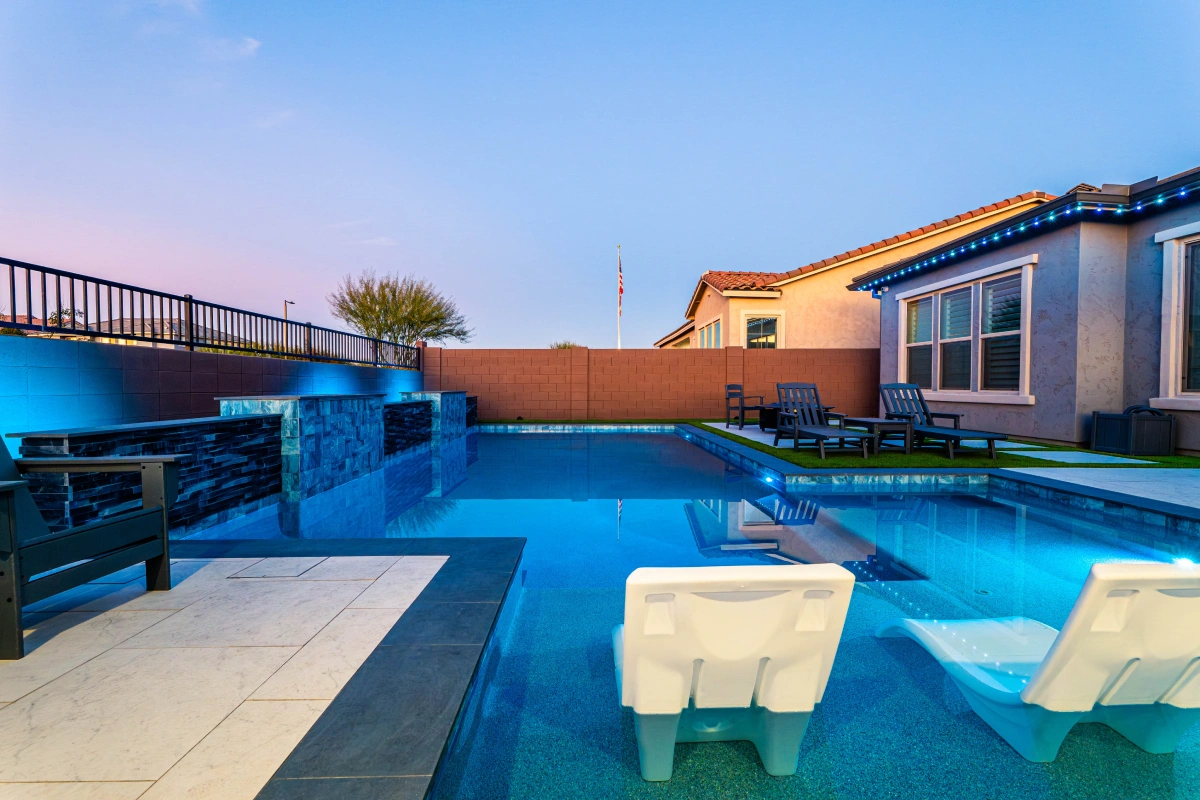
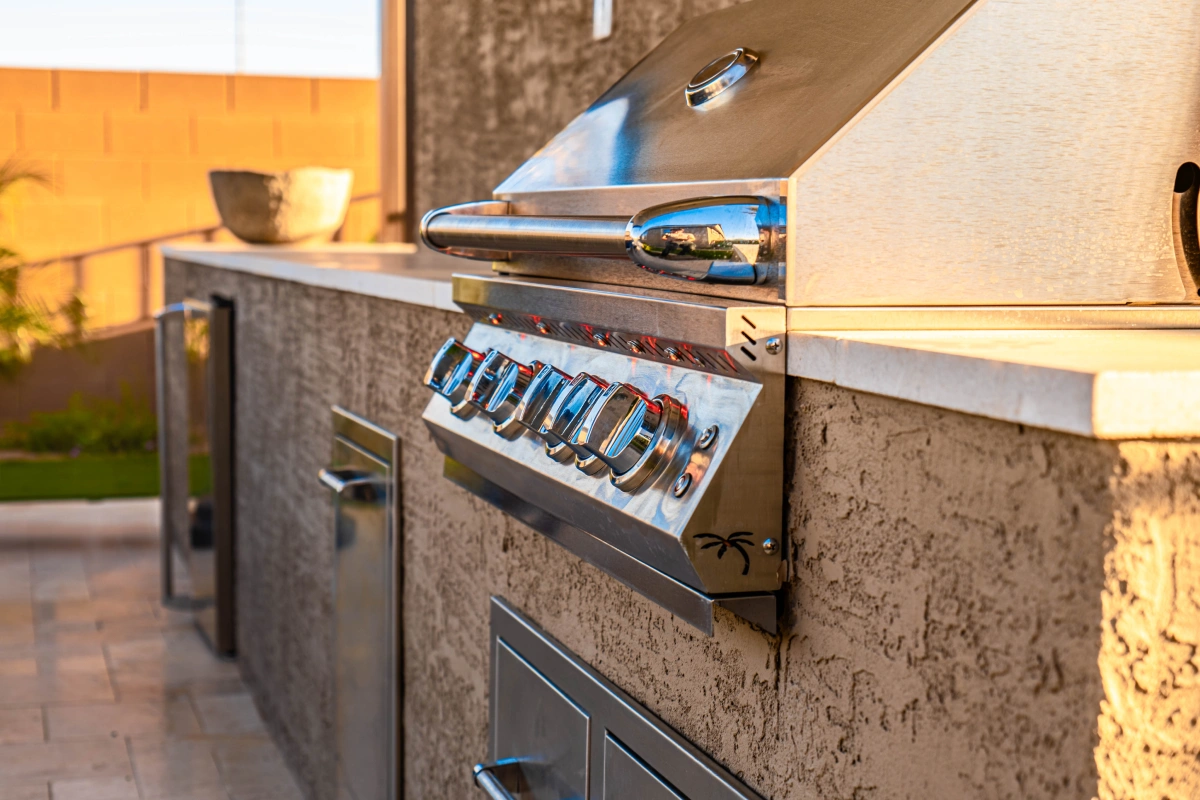
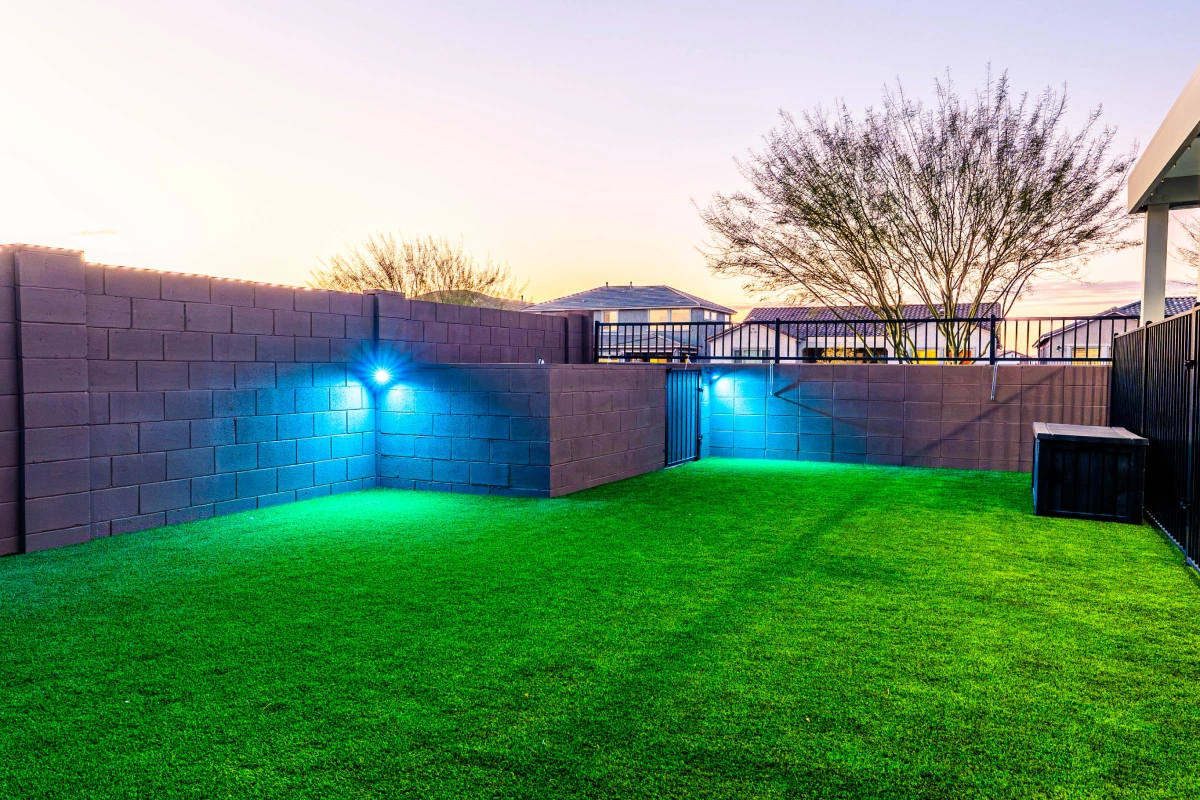
Conversely, many newer developments in Chandler feature smaller, walled-in yards where maximizing every square foot is critical. Here, a geometric or L-shaped pool might be the best way to tuck the water feature into a corner, leaving enough functional space for a custom outdoor kitchen or seating area. You also have to consider our monsoon winds; the shape and placement of the pool affect how easily leaves and dust get trapped in the water.
Comparing Your Pool Shape Options: A Decision Framework
To help you navigate this choice, we have broken down the key differences between traditional and modern pool shapes.
| Pool Shape | Best Suited For | Considerations & Trade-offs |
|---|---|---|
| Traditional Rectangle | Lap swimming, automatic pool covers, formal architectural styles. | Can dominate a small yard; may look out of place in a natural, desert-style landscape. |
| Freeform / Lagoon | Yards with existing mature trees have tropical or desert oasis aesthetics. | Harder to fit with automatic covers; requires careful plumbing design to avoid circulation dead spots. |
| Kidney Shape | Maximizing deck space in smaller yards, creating a natural flow. | Offers less swimming length than a rectangle of similar volume; classic but sometimes considered dated without modern finishes. |
| Geometric / Custom | Modern homes maximize odd-shaped lots, creating distinct zones (e.g., a swim area vs. a lounging area). | Highest complexity in construction; requires precise engineering to ensure proper structural integrity. |
Making the Right Choice for Your Backyard
Ultimately, the best pool shape for your home is the one that solves your specific spatial challenges while enhancing how you actually want to use the space. Whether that means a sleek geometric design for hosting large parties or a flowing freeform shape for a private desert retreat, the shape should serve your lifestyle, not just a design trend.
This is why working with an experienced design-build firm is so important. At Urban Outdoor Solutions, we are a family-owned design-build firm with over a decade of experience and dual ROC licenses (#345870 & #342297). Our owner, Joel, is personally involved in every project, ensuring owner-led quality control from the initial concept to the final installation.
We utilize a collaborative 3D design process, allowing you to see exactly how different pool shapes will look and function within your overall backyard vision before construction begins. This seamless design-build integration ensures that your pool complements your patio, landscaping, and lifestyle perfectly. Learn more about our complete design-build process and how we approach pool design and construction.
Schedule a design consultation with Urban Outdoor Solutions today, and let us help you explore the modern pool shapes that make the most sense for your specific East Valley property.
Frequently Asked Questions
Can I put an automatic cover on a freeform pool? It is possible, but it is much more difficult and expensive than covering a rectangular pool. The cover track usually has to be installed on top of the deck rather than hidden underneath the coping, which can detract from the seamless look of a modern freeform design.
Do curved pools take longer to build? Yes, generally speaking. The excavation, steel tying, and plumbing for a custom curved shape require more time and precision than a standard straight-line pool. You should expect the construction timeline to be slightly longer for complex freeform designs.
What is the best pool shape for a small yard? In very tight spaces, a “spool” (spa-pool hybrid) or a geometric shape designed to fit perfectly into a corner or along a wall is usually the best approach. Plunge pools with straight lines often maximize the usable water area without overwhelming a small patio. In-ground spas and hot tubs can also be combined with a small pool to create a multifunctional water feature in limited spaces.